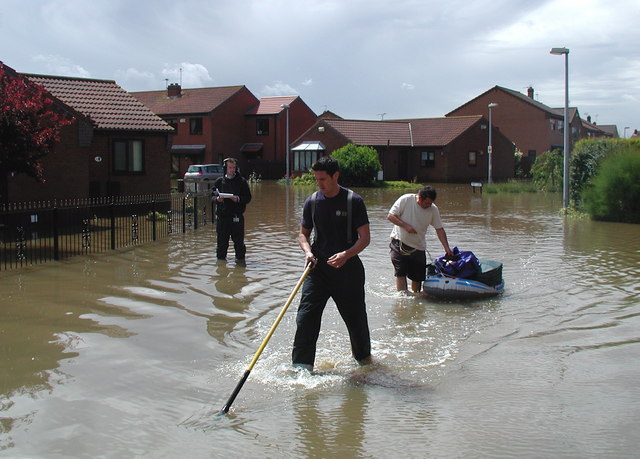

The water going down is not the finish line. A flooded home can still contain live electrics, weakened floors, sewage, hidden sharp objects and damp that takes months to remove. The safest recovery is a sequence: make sure the building is safe, preserve the evidence for your claim, then clean and dry it with the right protection.
If anyone is in immediate danger, call 999. If the emergency has passed but you are unsure whether the building is safe to enter, stay out and ask the emergency services, your council, landlord or insurer who should assess it.
Before you go back inside
Wait until the emergency services or local authority say it is safe to return. Flood levels can fall and rise again, and a familiar room may no longer have a sound floor beneath the mud.
- Do not switch the gas or electricity back on. Anything that may have become wet should be checked by a qualified electrician or Gas Safe registered engineer.
- Look and listen before entering. Cracks, bulging walls, sagging ceilings, a smell of gas or shifting noises are reasons to step back and get professional advice.
- Ventilate enclosed spaces cautiously. Open an outside door or window if you can do so without entering, then allow stale air and fumes to clear. Keep children and pets out.
- Assume floodwater was contaminated. Wear waterproof gloves, wellington boots and protective clothing. Cover cuts with waterproof dressings; goggles and a suitable mask help where cleaning will splash.
Never run a petrol or diesel generator, camping stove or barbecue inside a home, garage or other enclosed space. Carbon monoxide has no smell and can be fatal.
Call your insurer before the clear-out
Contact your buildings and contents insurers as soon as you can. They may arrange emergency accommodation, loss adjusters, pumping, drying or approved contractors. Ask what you can safely move or discard before the loss adjuster visits, and get that answer in writing if possible.
Build the evidence while it is still visible
- Photograph or film every affected room from wide views down to individual items.
- Mark the highest water level on a wall and photograph it beside a tape measure.
- Make a room-by-room inventory of damaged possessions; include brand, model and approximate age where you know them.
- Keep damaged items unless the insurer agrees they can go. If something is a health hazard, photograph it thoroughly first and record why it had to be removed.
- Save receipts for temporary accommodation, travel, food, emergency supplies and electricity used by commercial dryers. Your policy decides what can be claimed, but a missing receipt cannot be considered.
If you rent, tell both your landlord and your contents insurer. The landlord normally deals with the building; your own policy deals with your belongings.
Clean in the right order
Follow the insurer's instructions and use a specialist contractor where sewage, oil, chemicals, asbestos or structural damage may be involved. For an ordinary household clean-up, work from dirty and wet towards clean and dry.
- Remove standing water and mud. A hired pump may handle deeper water; a wet-and-dry vacuum is for the last shallow water and silt. Never use mains equipment until the electrical installation is declared safe, and never stand in water while connecting it.
- Wash, then disinfect. Physical cleaning with detergent removes dirt first; disinfectant works afterwards. Follow the product instructions and never mix cleaning chemicals.
- Separate contaminated items. Bag waste, wash cleanup clothes separately and wash hands with warm water and soap after every session.
- Start controlled drying. Ventilate on dry days. Dehumidifiers can help only after the electrics and equipment are safe, and they remove moisture from the air rather than standing floodwater.
Drying a flooded building is measured in weeks or months, not days. Forcing it too quickly can damage timber, plaster and masonry. Let the insurer's drying contractor or a building professional set the method and decide when the structure is genuinely dry enough to repair.
Take a meter reading before commercial dryers start, then keep a simple daily log. Some policies cover the additional electricity, and the readings also show how long the equipment ran.
Food, drinking water and belongings
Throw away food that floodwater or sewage has touched, including sealed tins: contamination and damage are not always visible. Discard wooden chopping boards and wooden utensils that were submerged. Clean and disinfect solid kitchenware and food-preparation surfaces before using them again.
If tap water smells, tastes or looks different, contact your water company and follow its notice. Private wells and springs covered by floodwater should be treated as unsafe until your local authority advises otherwise.
Check with the insurer before disposing of furniture, appliances or other possessions. Your council can explain collections for bulky flood waste and what to do with contaminated sandbags. Do not put used, contaminated sand or sacks into ordinary household waste unless the council specifically tells you to.
Choose repairers carefully
Flooded streets attract helpful volunteers — and sometimes opportunists. Do not let an unexpected caller into your home because they claim to be from a utility company, council or insurer. Check identification and call the organisation on a number you find independently.
- Ask your insurer whether it has approved contractors and whether using someone else affects the claim.
- Get more than one written quote for major work, with the scope, materials, start date and payment stages set out.
- Avoid large cash deposits or full payment in advance. Pay in stages against completed work.
- For permanent flood-resilience work, use a suitably qualified property professional rather than a doorstep sales pitch.
Repair for the next flood, not the last one
Before the walls are closed and the floors replaced, ask the insurer and a Property Flood Resilience specialist about changes that make a future recovery faster. Depending on the property, that might mean raising sockets and services, fitting non-return valves or self-closing airbricks, choosing tiled rather than absorbent floors, and using water-resilient insulation or wall finishes.
Products that try to keep water out — such as door barriers and water-activated barriers — are only one layer. A survey should consider every route water can take, including airbricks, drains, walls and floors. No barrier makes a home floodproof.
Report what happened
Once everyone is safe, log what happened. The route depends on where you live and where the water came from:
- England: GOV.UK's report-a-flood service directs reports to the water company, council or Environment Agency. The Environment Agency incident hotline is 0800 80 70 60 for pollution, main-river, reservoir or coastal incidents.
- Scotland: use SEPA's Report a Flood service to record local flooding for future flood-risk management. It does not trigger an immediate response.
- Wales: Natural Resources Wales accepts environmental and relevant flood-incident reports online or on 0300 065 3000; road drainage, burst pipes and sewers may instead belong to the council or utility company.
- Northern Ireland: the Flooding Incident Line on 0300 2000 100 takes reports about roads, burst water mains and blocked drains, 24 hours a day.
A report is not an emergency call and does not replace 999. It creates an official record that can help agencies understand the event and plan future work.
Look after the people as well as the house
Flood recovery is exhausting. Poor sleep, irritability, anxiety, difficulty concentrating and feeling able to deal with only one task at a time are common responses to a traumatic disruption. They are not a sign that you are handling it badly.
Write down names, claim numbers and next actions because it can be hard to retain information under stress. Accept practical help, split the paperwork between people, keep ordinary meals and routines where you can, and take breaks away from the damaged rooms.
The National Flood Forum offers practical and emotional support to people affected by flooding. If anxiety or low mood is making everyday life difficult, contact your GP or NHS 111; urgent mental-health support is also available through NHS crisis services.
When you have the headspace, update your household flood plan with what you learned: which warning reached you, what you wished had been upstairs, and which doorway or drain let water in.